The best summaries on Business Psychology

psychology .jpg.jpeg
Investigating Psychology

Business Ethics.pdf
Business Ethics
business psychology.pdf
Business Psychology

Updated on May 22, 2025
Business psychology is a subfield of applied psychology. It focuses on understanding macroeconomic relationships. It connects the psychological foundations of human experience and behavior with economic components.
This primarily includes behavior in the workplace, in organizations, and in the marketplace. The goal of business psychologists is to understand, predict, and utilize human behavior in an economic context.
In a broader sense, they can be divided into the following four sub-areas:
Economic psychology deals with the motives of economic actors and the well-being of individuals, groups, and entire nations. The goal is to analyze how economic actions, causes of behavior, and decisions are related.
The focus is on Homo Oeconomicus, who acts according to the principle of individual utility maximization, as well as the psychology of decision-making. Certainty and risk play a major role, as do decision anomalies and heuristics. Making "rational" decisions does not necessarily mean making a sensible decision.
There are also overlaps with organizational psychology and market psychology when economic decisions are made, for example by organizations.
The subject area of market and consumer psychology encompasses both the economic development of societies and changing values, as well as the psychological explanations for human behavior in the market or in all possible actions involving money. This includes, for example, income, savings, or taxation. Advertising psychology is also part of this field. It uses the knowledge of consumer psychology to make advertising more effective, far-reaching, and engaging.
Organizational psychology, on the other hand, focuses on the structures of an organization and how these can influence the efficiency and effectiveness of its employees. Its subject areas include organizational culture (a company's norms and value system), the influences of and within organizational groups, group development, organizational power distribution, conflict resolution, the advantages and disadvantages of different leadership styles, and organizational change or organizational development (change management).
Industrial or personnel psychology deals with personnel selection and development, job design, job satisfaction and the effects of excessive workload (burnout, etc.).
It also describes the psychological and health consequences of unemployment, which arise, for example, from the lack of structure in everyday life, social isolation or the lack of financial stability.
This classification of the field of business psychology already covers the career options after graduation quite comprehensively. If you focus on economic or consumer psychology, you can work as a consultant in the marketing department of large companies or establish yourself in market research institutes.
Organizational and industrial psychology, on the other hand, is more likely to be found in a human resources department or its consulting department. The task is to select, hire, and regularly train suitable employees to maintain their motivation. Furthermore, working conditions should be pleasant so that employee satisfaction can guarantee the company's quality standards. Studies show that satisfied employees perform far better than dissatisfied ones.
Here's a list of career paths you should consider if you are studying Business Psychology. All of them involve the application of business psychology in varying degrees.
The program, of course, consists of more than the four areas mentioned at the beginning. It covers not only the fundamentals of psychology, including social psychology, personality psychology, intercultural psychology, and psychological diagnostics, but also all the fundamentals of business management, including areas such as business administration, service management, marketing, entrepreneurship, and business ethics. These areas are complemented by topics such as law, statistics, and design thinking.

The business psychology program also contains many useful aspects that I, as a student, can successfully integrate into my everyday life. One example that is often considered very useful is considering different learning techniques or learning styles to make learning more effective, shorter, and more successful.
Of course, there are many different classifications of learning types (link), but they can all be roughly divided into three learning types:
It has been proven that people learn differently and achieve better results with certain methods. However, the classification into different learning types is largely fluid. Generally, a balanced mix of learning techniques is recommended. This means absorbing content through as many different sensory channels as possible, as this allows information to be stored in different parts of our brain, making it stay in our memory longer.
Furthermore, regardless of learning style, repetition is key. After just one hour, we remember, on average, only 80% of what we previously learned. After a day, that number drops to just 20%, which is why repetition after just one hour is recommended.
By knowing how and with what to learn more successfully, you can not only save yourself a lot of time but also a lot of stress.
Well-being of employees, both physically and mentally, has become increasingly significant in the workplace. Employers and employees are training their focus on updating well-being protocol in the workplace. This is directly connected to business psychology, which plays a starring role in implementing mental health initiatives, stress management tools, and general measures to boost efficacy.
AI has made its way into the world of psychology - with companies integrating AI tools into their recruitment and training processes. Business psychologists can now use AI to automate the more 'manual' aspects of the hiring process, and focus their energies onto the arenas that require greater human involvement.
The benefits are many:
Hybrid working is a staple of most workplaces in the year 2025. Business psychologists are integral to the process of curating a satsifactory hybrid work experience.
We live in a fast-paced, digital world. Present-day employees need to armour themselves with an expanding portfolio of skills, in order to keep up with the advent of technology.
This is where business psychologists come in. They identify which skills are most likely to be relevant in the coming years and can mould the recruiting criteria accordingly. It is also important that employees be able to upskill themselves in their places of work - another area where business psychologists shine!
Diversity and Inclusion (DEI) initiatives have become increasingly relevant in the modern workplace, with employers placing high value on the benefits of inclusive environments. Business psychologists play a key role in the structuring of such an environment and in ensuring factors such as unbiased hiring, accessible development, equal representation for minority groups, and psychological safety.
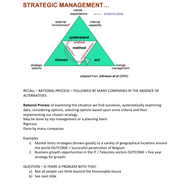
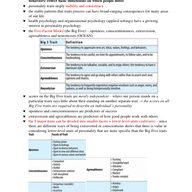
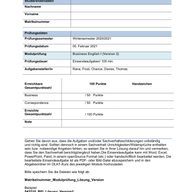
On Studydrive, you'll find a wealth of study materials to help you prepare for courses or exams. Here you'll find summaries and notes, solutions to past exams, and worksheets.
With our smart flashcard tool, you can quickly and effectively test your knowledge or easily learn on the go. Simply create your own flashcards or practice with those of your classmates.
Sign up for Studydrive now and get free access to all courses relevant to your subject. Plus, connect with other students and get helpful answers to all your questions!