Financing your Medical Degree in Germany

Starting your professional life with a completed medical degree is a dream scenario for many. But unfortunately, the path to getting there is no walk in the park, it's more like a triathlon. In the middle of summer! With extra weight! There's hardly any time left for part-time jobs, let alone free time. But the time you put into lectures and study sessions doesn't pay your rent. On average, medical students can spend between €570 and €1,500 a month. If you're now rightly asking yourself how you're supposed to finance all of this while studying full-time: we've got you covered!

Financing Options for Medicine Students
BAföG
Probably the best-known way to avoid being penniless at the end of each month is the Federal Training Assistance Act, or BAföG. Medical students without children can receive up to €730 per month if their income is below €450 (€540 from October 2022). However, this only applies if their parents' income is below the contribution assessment ceiling. This law is intended to create equal opportunities and also support students who cannot rely on extensive financial support from their parents. You can apply for BAföG at the Office for Training Assistance.
Scholarships
Institutional funding for medical studies allows you to focus primarily on your studies and remain largely worry-free regarding your finances. The big advantage here is that no money needs to be repaid. Nevertheless, demand is not very high given the profitable advantages, as many young people associate a scholarship with exceptional academic achievements. However, the requirements can also be met through political or social commitment, significant personal achievements, or a convincing application. We've already done the work for you and compiled useful institutions that offer scholarships for medical students here. If you want to apply for several scholarships at the same time, you should take a look at the "E-follows" scholarship database.
Student Loans
The Kreditanstalt für Wiederaufbau (KfW) offers, among other things - student loans, including variable interest rates that depend on the term, loan amount, and type of study. These loans are repaid in monthly installments and can sometimes financially support the entire course of study or specific phases.
Educational Fund
A less common option for covering living expenses, tuition fees, or financing a semester abroad is to use an education fund. These funds are financed by private donors or institutional investors. Repayment is income-dependent once you successfully start your career.
Part-time Jobs
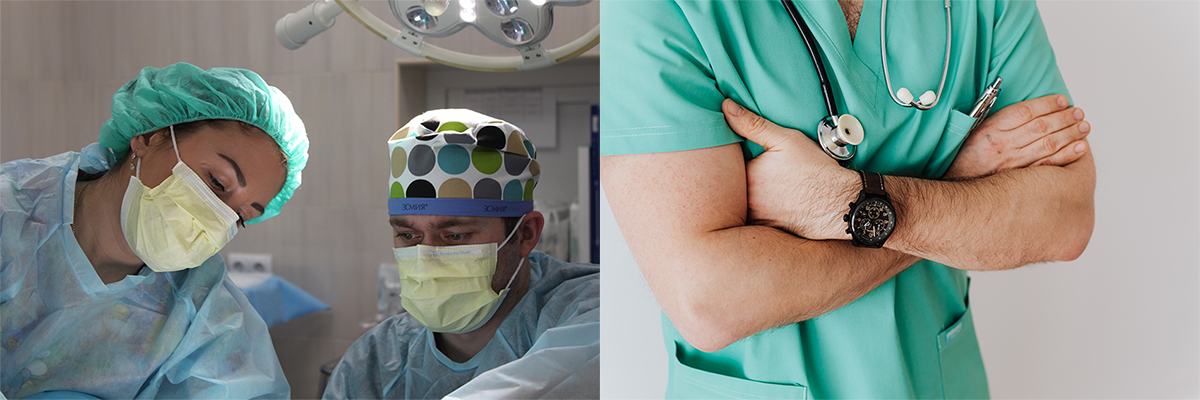
Even if you barely have time to pursue meaningful part-time work alongside your studies, there are actually several ways to combine medical studies and part-time work. On the one hand, you can join institutions as a research assistant, preparing experiments and related documentation or evaluating study data. On the other hand, you can gain valuable experience as a hook holder during operations. Establishing procedures and related activities, such as sterile washing or applying bandages, as routine early on pays off in the long run. Alternatively, to catch up on previously completed material in later semesters, you can work as a tutor in a revision course. As a tutor or research assistant, you are paid according to set salary scales, while as a hook holder you can aim for a somewhat higher salary.
You can also find additional part-time jobs for medical professionals in our job board. There, you can easily filter by industry, employment type, and region.

As you can see, there are a few ways to make life as a medical student financially easier. Fundamentally, it's always most important to have a financial plan to have maximum overview. We've collected the right money management life hacks for you.