Internal Rate of Return Summaries
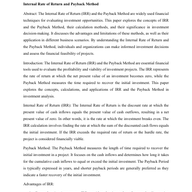
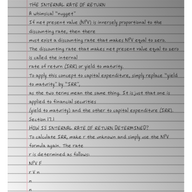
THE INTERNAL RATE OF RETURN.pdf
FM431 - Corporate Finance

The internal rate of return (IRR) is the discount rate that sets the net present value (NPV) of all future cash flows from a project to zero. It is commonly used to compare and select the best project, choosing a project with an IRR above the minimum acceptable return (hurdle rate).
To calculate the IRR, the present value is set to zero and then the discount rate is determined. This discount rate is then the value of the internal rate of return that we needed to calculate.
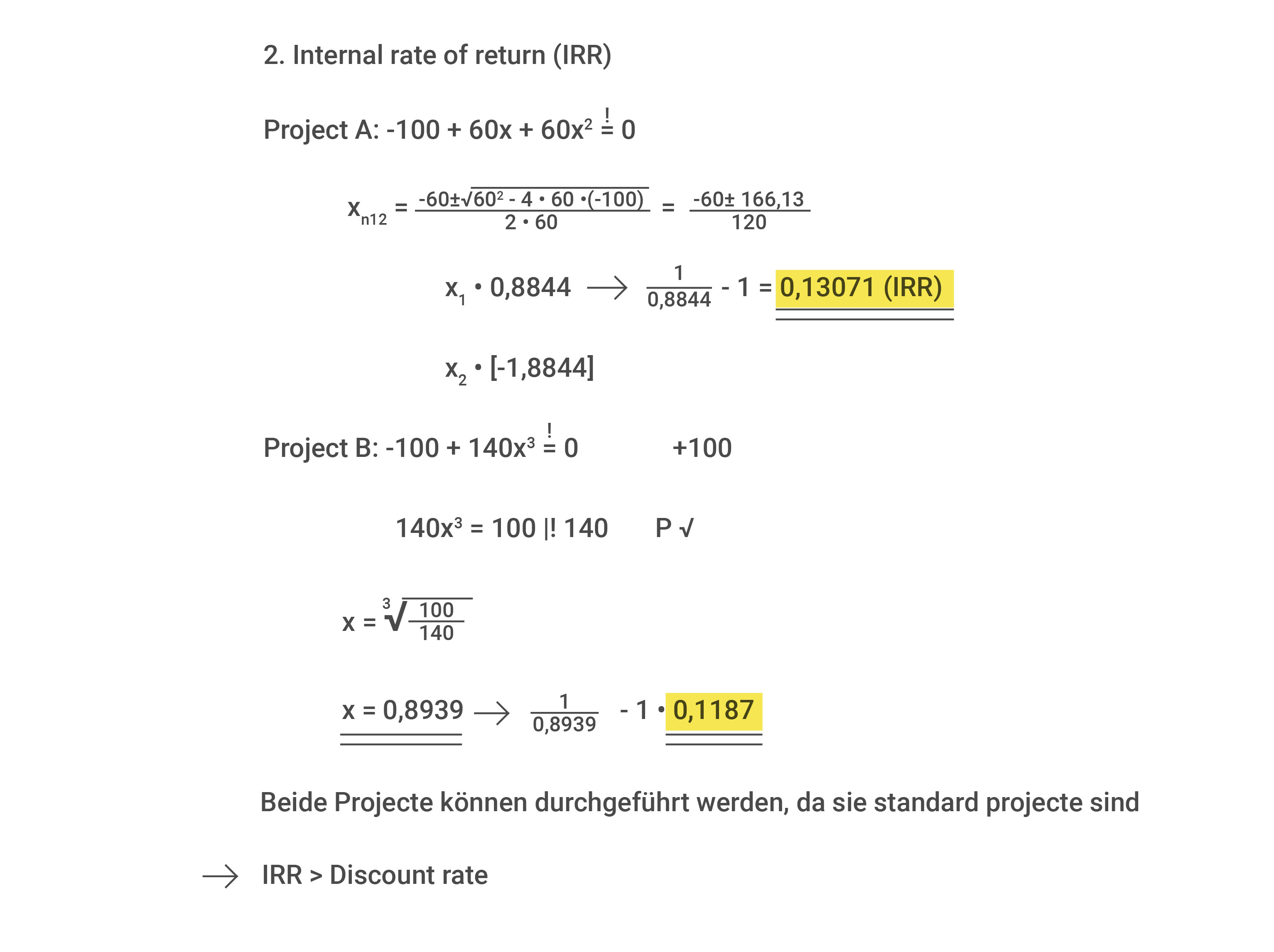
2. Assume that the following two projects are mutually exclusive.
(a) Calculate the internal rate of return (IRR) and interpret your result.
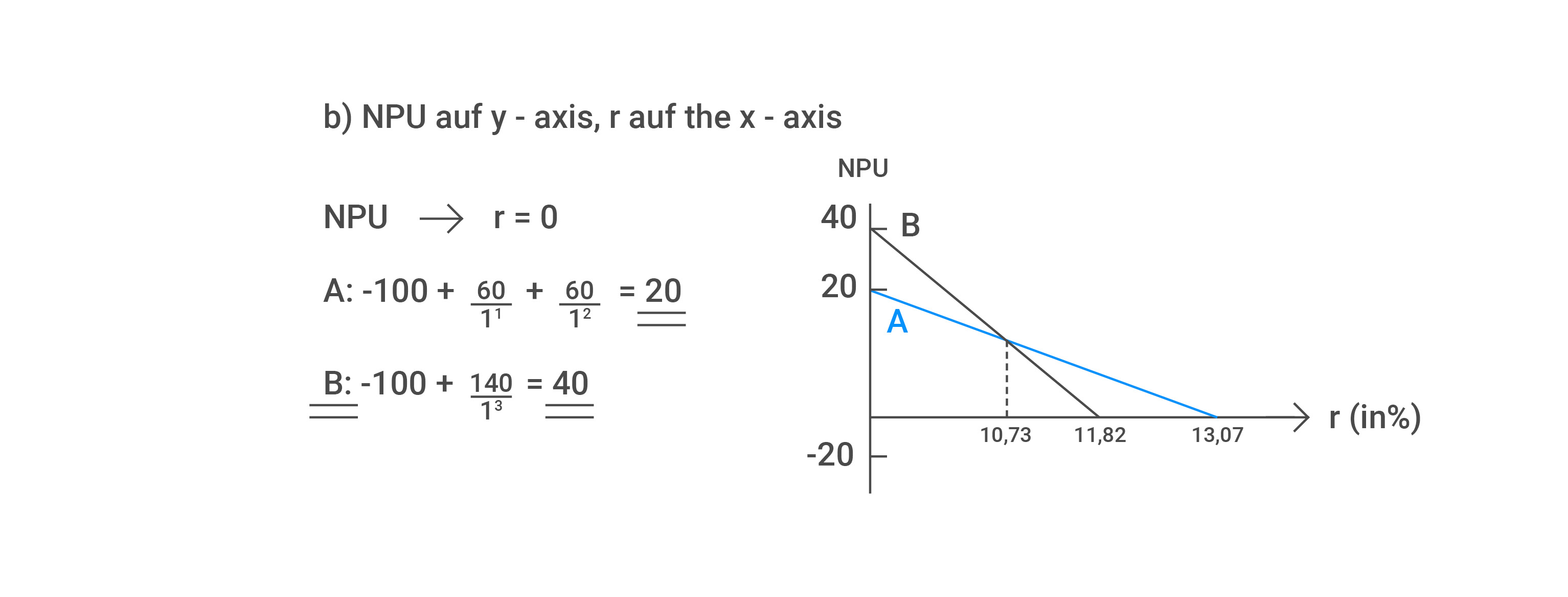
(b) Plot the net present value against the interest rate (NPV on the y-axis, interest rate on the x-axis).
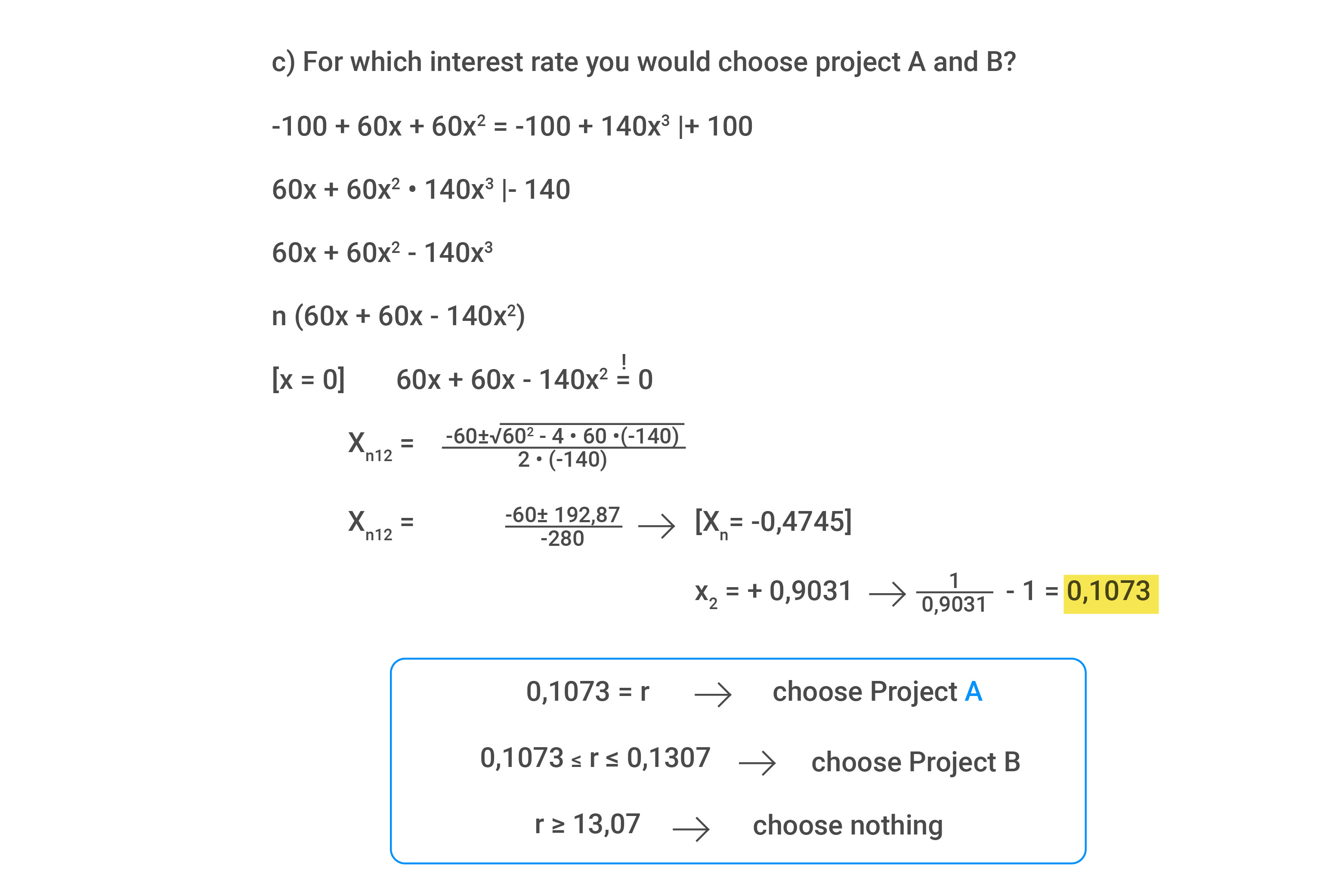
(c) At what interest rates would you choose Project A and at what interest rates would you choose Project B?
The higher the internal rate of return of a project, the more desirable it is to pursue that project as the best available investment option.
The IRR is consistent across investments of different types, and as such, IRR values are often used to evaluate several prospective investment options considered by a company on a relatively equal basis.
Assuming that the investment amount is equal among the various available investment options, the project with the highest IRR is considered the best, and that particular option will be pursued first by an investor.
The IRR of any project is calculated considering the following three assumptions:
The IRR of any project is calculated considering the following three assumptions:
As an example, we can take the case of an energy company that decides whether to commission a new plant or expand the operations of an existing plant. The decision can be made by calculating the IRR to determine which of the options will yield a higher net profit.
The hurdle rate, or required rate of return, is the minimum return a company expects for its investment. Most companies adhere to a hurdle rate, and any project with an internal rate of return above the hurdle rate is considered profitable.
Although it is not the sole basis for considering a project for investment, the hurdle rate is an effective mechanism for screening out projects that will not be profitable or will not be profitable enough. Typically, a project with the largest difference between the hurdle rate and the IRR is considered the best project for investment.
Here are two rules you can follow:
Independent projects: IRR > hurdle rate, accept the project
Independent projects: IRR < hurdle rate, reject the project
Other rules of thumb are:
On Studydrive, you'll find a wealth of study materials to help you prepare for courses or exams. Here you'll find summaries and notes, solutions to past exams, and worksheets.
Sign up now on Studydrive and get free access to all the courses that fit your topic. Plus, connect with other students and get helpful answers to all your questions!