The best notes on Electronegativity

Elektronegativität_Herleitung.docx
Allgemeine Chemie für PharmazeutInnen
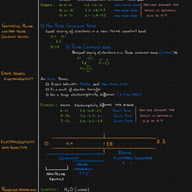
Chemical Bonds & Electronegativity - 02.jpg
Biomedicine

Updated on May 7, 2025.
Electronegativity describes the ability of an atom to attract electrons from a chemical bond. The greater the electronegativity, the more strongly the atom attracts the electrons from the bond.
Electronegativity is abbreviated by EN or the Greek letter chi (χ). The halogen fluorine is the atom with the greatest ability to attract electrons and therefore has the highest EN value. The EN values may vary slightly in different books or periodic tables (due to different determination methods), but the basic order from weak to strong is always the same.
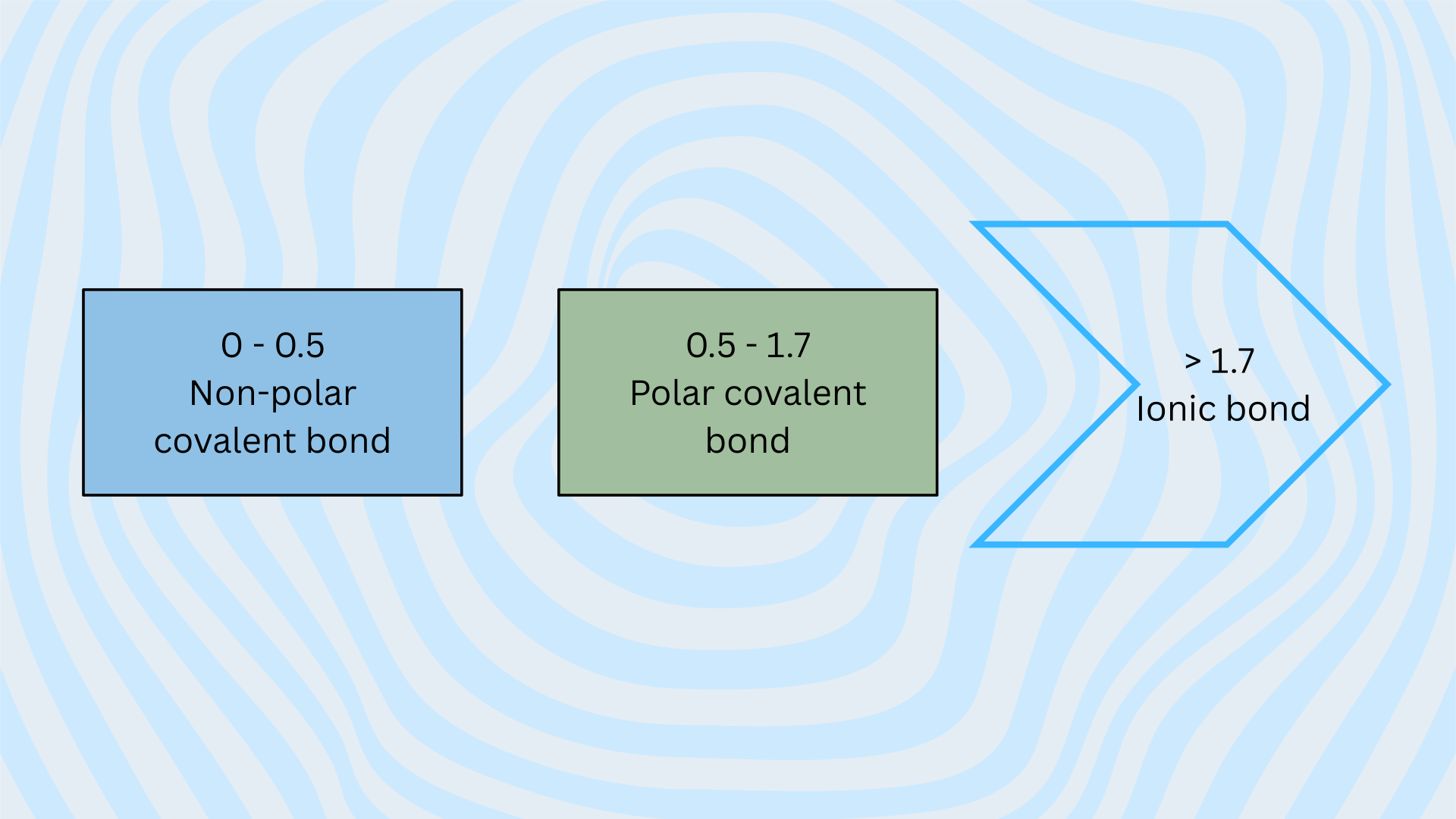
In most periodic tables, the EN values are given. Halogens do not have EN values. Electronegativity is useful for determining the nature of a chemical bond. To do this, the difference in electronegativity between the atoms involved in the bond must be calculated, i.e. the electronegativity difference. To do this, you always subtract the lower value from the higher one. Depending on the value of the difference, you can then say whether it is a covalent bond or an ionic bond. Covalent bonds can also be classified as non-polar or polar . The threshold for distinguishing between covalent and ionic bonds is a value of 1.7. An electronegativity difference of more than 1.7 is an ionic bond. Anything below this is considered a covalent bond. Covalent bonds can be further divided into non-polar and polar. The threshold for this is 0.5. If the difference in the EN values is smaller, the bond is referred to as non-polar. Above this value, the bond is referred to as polar.
A few examples for better understanding:
Let's take an example of a bond between two atoms - A and B. If the atoms are equally electronegative, both will have the same tendency to attract the bonding pair of electrons. Thereby, it will be found half way between atoms A and B. To get a bond like this, A and B would usually have to be the same atom.
This sort of bond could be thought of as being a "pure" covalent bond - where the electrons are shared evenly between the two atoms. Example: H2 and Cl2 molecules would have a pure covalent bond.
When B is more electronegative than A, it will exert a greater attraction towards the electron pair. The B-end of the bond will have greater electron density. B, therefore, becomes 'slightly' negative. A, conversely, becomes 'slightly positive' owing to a relative scarcity of electrons. This is defined as a polar bond.
A polar bond is a covalent bond where there is is a separation of charge between one end and the other end. One end is slightly positive and the other slightly negative. Examples include most covalent bonds. Examples include the hydrogen-chlorine bond in HCl or the hydrogen-oxygen bonds in water.
The electron pair is dragged over to B's end of the bond. B has complete control over the electrons. This forms an ionic bond.
In a pure covalent bond, we know that the electrons are held exactly half way between the atoms. In a polar bond, the electrons have been dragged slightly towards one end.
You can also find a good summary of the topic in the following video::
On Studydrive, you'll find a wealth of study materials to help you prepare for courses or exams. Here you'll find summaries and notes, solutions to past exams, and worksheets.